The Incident Detection and Reporting Process
Step 1: Establishment of Detection Mechanisms: The first step in the incident detection and reporting process involves setting up the necessary mechanisms for monitoring and identifying potential security incidents. This includes the deployment of Intrusion Detection Systems (IDS), Security Information and Event Management (SIEM) systems, and other monitoring tools that can track and analyze network traffic, user behavior, and system activities for signs of malicious activity.
Step 2: Signal Triage and Analysis: Once a potential incident is detected, it must be assessed and analyzed to determine its nature and severity. This triage process involves sorting through alerts, distinguishing false positives from genuine security incidents, and prioritizing them based on their potential impact.
Step 3: Incident Classification and Recording: Genuine incidents must be classified according to predefined categories (such as unauthorized access, malware infection, data breach, etc.) and recorded in an incident management system. This documentation should include details about the incident’s nature, the affected systems or data, and the initial findings of the analysis.
Step 4: Notification and Escalation: Relevant stakeholders, including management, IT staff, and, if necessary, external partners (such as law enforcement or regulatory bodies), must be notified about the incident according to the organization’s communication plan. The notification should include an initial assessment of the incident and recommend immediate actions.
Step 5: Containment, Eradication, and Recovery: While not the final step in the overall incident response process, within the context of detection and reporting, it’s essential to initiate immediate actions to contain and limit the impact of the incident. This can include isolating affected systems, disabling compromised accounts, or implementing temporary fixes.
Step 6: Post-Incident Reporting and Analysis: After the incident has been managed, a detailed report should be prepared, highlighting the timeline of events, the response actions taken, and the lessons learned. This post-incident analysis is crucial for improving future security measures and response strategies.
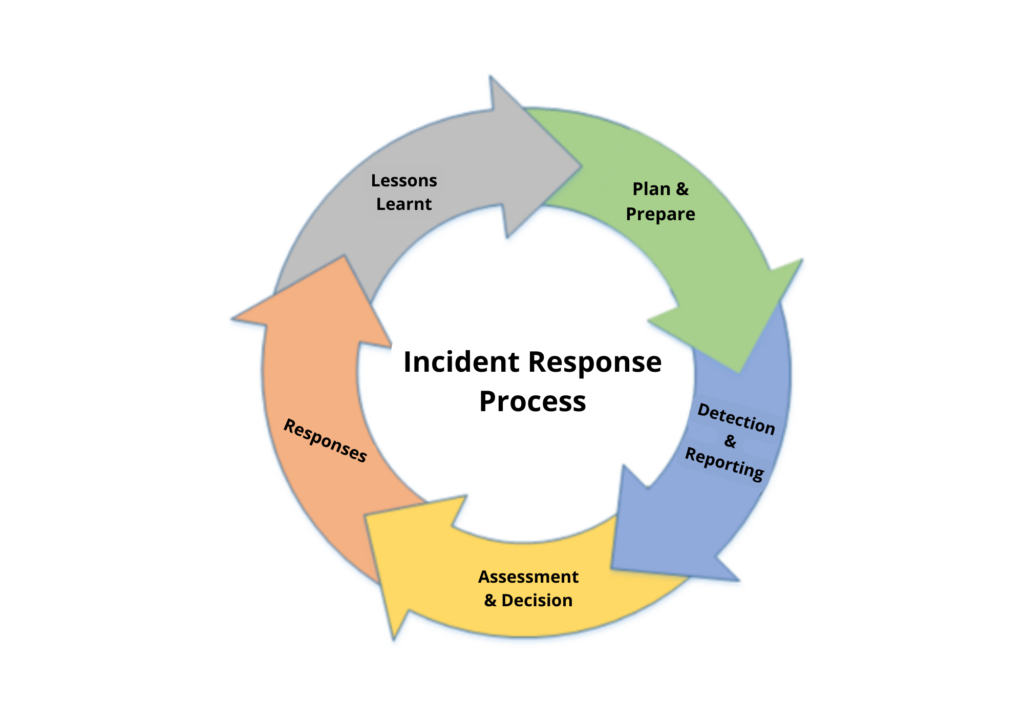
Figure-2