ISO 27001
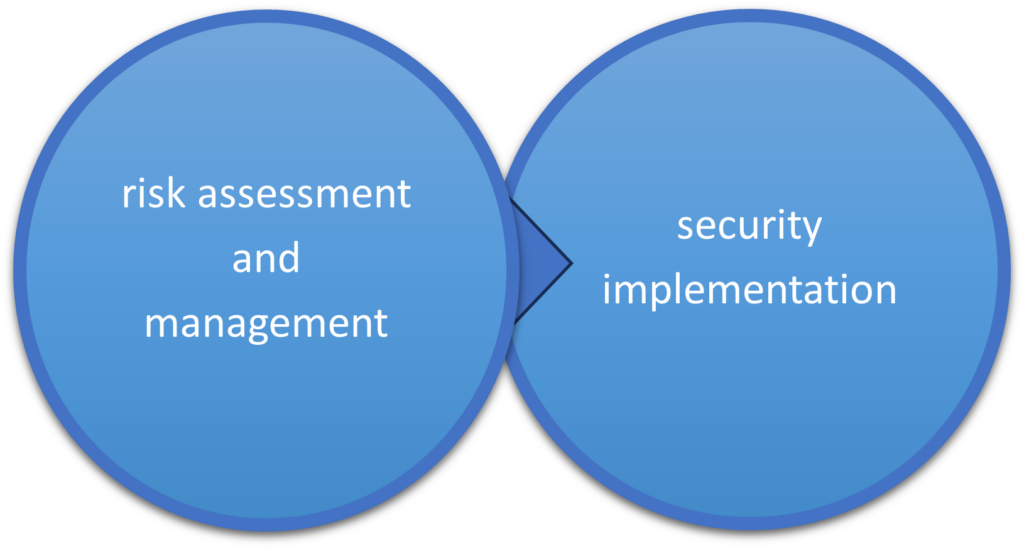
ISO 27001 Framework
As already mentioned, in the evolving scenario of information security, organizations are constantly challenged to protect their valuable data assets. So, ISO 27001 emerges as a lighthouse, offering a comprehensive and internationally recognized standard for implementing an Information Security Management System (ISMS). This isn’t just a rigid rulebook; it’s a flexible framework that empowers organizations to tailor information security practices to their specific needs and context. Let’s proceed with understanding its core principles.
ISO 27001 is built upon the foundation of an ISMS, adhering to core principles like:
- Risk-based approach – Identify and prioritize information security risks based on their likelihood and potential impact. Focus your resources on protecting the most critical assets from the most significant threats.
- Continuous improvement – Security is “an ongoing journey”, not a destination. Regularly review, update, and improve your ISMS to adapt to evolving threats and vulnerabilities.
- Management commitment – Senior leadership plays a crucial role. Demonstrate a strong commitment to information security by allocating resources, approving policies, and fostering a culture of security awareness.
ISO 27001 doesn’t dictate specific controls; it provides a comprehensive set of control objectives and controls within Annex A. These controls act as a menu list, allowing organizations to choose the ones most relevant to their information security risks and organizational context. Here’s a breakdown of the control categories:
- Risk Management: Establishes processes for identifying, analysing, and evaluating information security risks.
- Access Control: Defines measures to control access to information assets, ensuring only authorized individuals have access.
- Human Resources Security: Addresses security awareness training and appropriate behaviour for employees handling information assets.
- Physical and Environmental Security: Focuses on safeguarding physical locations where information systems and data are housed.
- Cryptology: Covers the use of encryption techniques to protect sensitive information.
- Operational Security: Defines practices for secure operation of information systems, including secure configuration and change management.
- Communication Security: Ensures the confidentiality, integrity, and availability of information during communication and information sharing.
- Acquisition, Development, and Maintenance: Addresses security considerations throughout the lifecycle of information systems.
- Supplier Relationships: Establish security requirements for relationships with third-party vendors who handle your organization’s information.
- Asset Management: Focuses on identifying, classifying, and protecting information assets.
- Incident Management: Defines a process for identifying, reporting, and resolving information security incidents.
- Business Continuity Management: Ensures the organization can recover from disruptive events and resume critical operations.
As already mentioned, achieving ISO 27001 certification demonstrates a strong commitment to information security and can offer several advantages:
- More credibility – Certification signifies to clients, partners, and stakeholders that your organization takes information security seriously.
- Effective risk management – The ISMS framework promotes a structured approach to identifying, analysing, and mitigating information security risks.
- Streamlined compliance – The controls outlined in ISO 27001 often align with the control requirements of various information security regulations. This can ease the compliance burden.
- Competitive advantage – Currently, a robust information security posture can be a competitive differentiator among actors as we live in a data-driven world.
In conclusion, ISO 27001 is a powerful tool for organizations of all sizes seeking to establish a robust ISMS and elevate their information security posture. It’s a flexible framework that allows for customization, while providing a structured approach to managing information security risks.
By leveraging ISO 27001, organizations can build trust with stakeholders, ensure business continuity, and thrive in the ever-changing information security landscape.